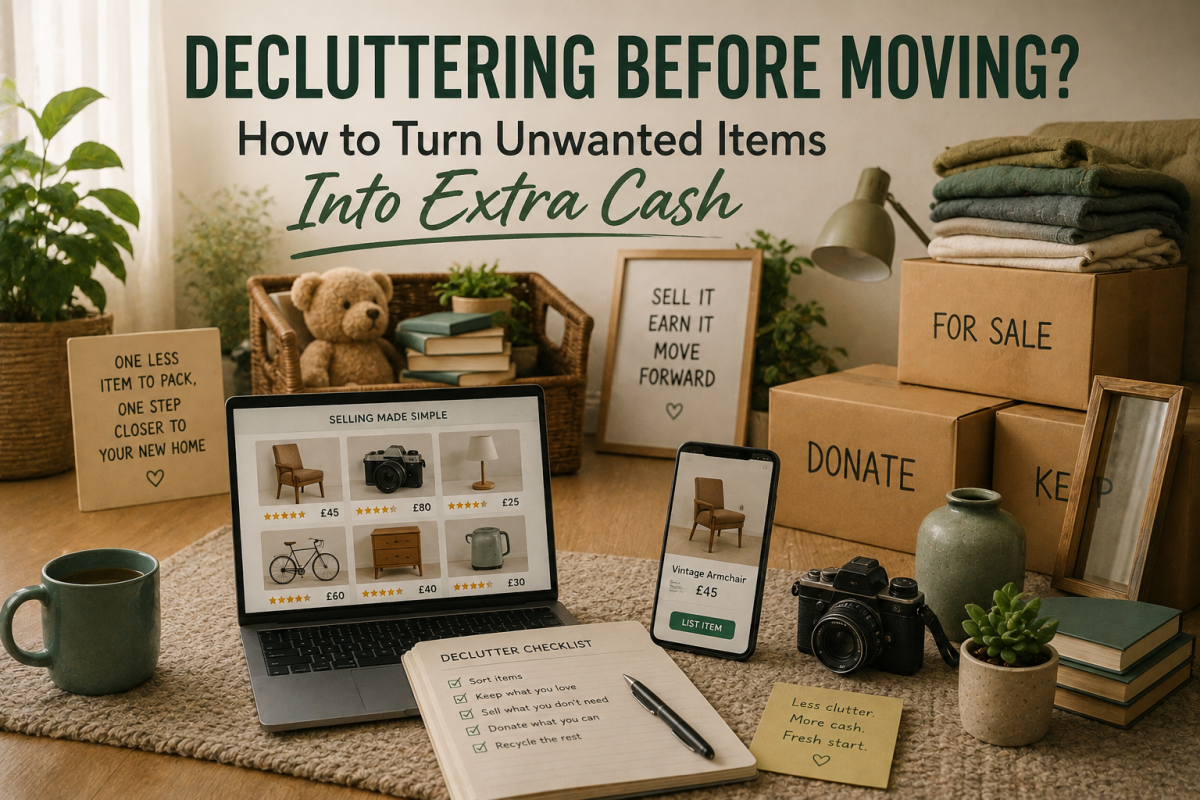
Sell, Store, Donate or Recycle Before Moving Day
Moving house provides the perfect reason to take a proper look at everything you’ve accumulated over the years. From furniture that no longer suits your needs to electronics sitting unused in cupboards, many households have possessions they don’t particularly want to take to their next home.
Decluttering before moving can do more than reduce the number of boxes you need to pack. Selling unwanted belongings can generate additional money towards your relocation while potentially reducing the volume that needs to be transported. The important part is knowing what is worth selling, what you should keep, and when storage, donation or recycling makes more sense.
This guide focuses specifically on making those decisions and turning suitable unwanted belongings into additional moving funds. For broader advice on budgeting and reducing relocation expenses, read our companion guide, How to Save Money Before Moving House.
Contents
- Why Decluttering Saves Money Twice
- Decide What to Sell, Store, Donate or Recycle
- Items Worth Selling Before You Move
- Choosing the Right Online Marketplace
- Don’t Overlook Local Selling Options
- When Storage Is Better Than Selling
- What to Do with Items That Don’t Sell
- Recycle What You Can’t Sell or Donate
- Create a Decluttering and Selling Timeline
- Decluttering Before Moving Checklist
Why Decluttering Saves Money Twice

There’s an obvious financial benefit to selling something you no longer need: you receive money that can go towards your moving expenses.
But there’s a second potential saving.
Removal costs are influenced by factors including how much you’re moving, the labour involved, vehicle requirements and the time needed to complete the job. Taking fewer possessions with you may therefore help reduce the scale of your move.
There’s also less to pack, carry and unpack at the other end.
The objective shouldn’t be to get rid of possessions purely for the sake of it. Instead, use the move as an opportunity to ask whether each item still deserves the space and moving effort it requires.
Move Store & More Tip #1 – Every unwanted item you sell can generate money while removing something from your moving load.
Decide What to Sell, Store, Donate or Recycle

One of the easiest ways to get stuck while decluttering is making every possession a simple choice between “keep” and “throw away”.
A better system is to create five categories:
- Take to the new home
- Sell
- Store
- Donate
- Recycle or dispose of responsibly
This gives you somewhere to place items you’re unsure about without automatically keeping everything.
Ask practical questions as you work through each room. Have you used the item recently? Will it fit your new property? Is replacing it later likely to cost significantly more than moving it? Does it have genuine sentimental value?
For things you’re considering selling, add another question: is the likely sale price worth the time required to photograph, list, communicate with buyers and arrange collection?
Sometimes the answer will be no.
Move Store & More Tip #2 – Give every possession a destination rather than simply creating keep and discard piles.
Items Worth Selling Before You Move
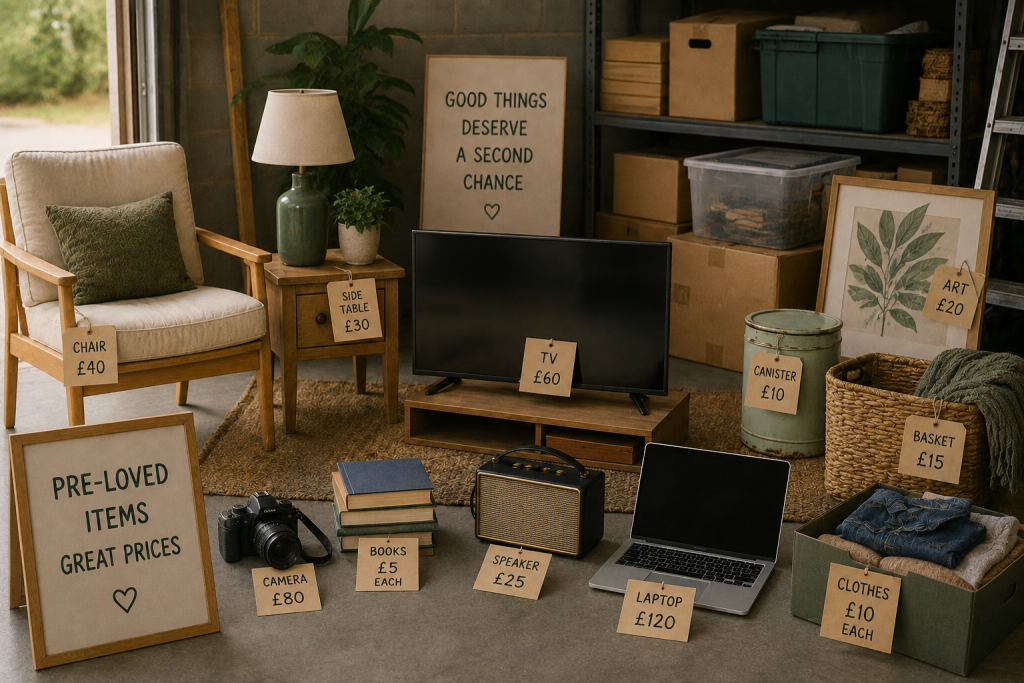
Not everything in your home will be worth listing individually.
Concentrate first on possessions with enough resale value to justify the effort involved.
Possible examples include:
- furniture in good condition
- working electronics
- unused appliances
- bicycles
- tools and DIY equipment
- garden equipment
- quality clothing
- collectables
- children’s equipment they’ve outgrown
- unused hobby or sporting equipment
Larger items can be particularly useful to deal with early. Selling a wardrobe or spare bed, for example, removes something substantial from the moving inventory and can also raise money.
Be realistic about condition and pricing. Something’s sentimental or original purchase value doesn’t necessarily reflect what another person will pay for it second-hand.
Move Store & More Tip #3 – Start with bulky, higher-value possessions that could make the biggest difference to both your moving load and budget.
Choosing the Right Online Marketplace

Online selling gives you access to a much larger pool of potential buyers, but different platforms suit different possessions.
Rather than uploading everything to the same website, think about where someone is most likely to look for the item you’re selling.
General marketplaces can work well for furniture and everyday household goods. Specialist platforms may make more sense for clothing, collectables or particular hobbies.
Whatever platform you choose, a good listing should include:
- clear photographs
- an accurate description
- measurements where relevant
- honest information about condition
- collection or delivery arrangements
- a realistic asking price
Avoid leaving listings until moving week. Finding buyers, answering questions and arranging collections takes time, and you don’t want unwanted furniture still sitting in the hallway when the removal van arrives.
Take sensible precautions when dealing with buyers, payments and collections, and follow the safety guidance provided by whichever marketplace you use.
Move Store & More Tip #4 – Match the selling platform to the item rather than listing everything in the same place.
Don’t Overlook Local Selling Options

Online selling doesn’t necessarily mean posting belongings across the country.
Local marketplaces and community groups can be particularly useful for bulky possessions because buyers can collect them directly from your home.
Other possibilities include:
- car boot sales
- local noticeboards
- community groups
- second-hand furniture dealers
- specialist dealers for valuable items
Selling locally can eliminate postage and packaging while helping you clear larger items quickly.
You might also consider grouping lower-value possessions together. A box of children’s toys, a collection of garden tools or a bundle of books may be easier to sell as one lot than through dozens of individual listings.
Move Store & More Tip #5 – Bundle lower-value belongings together when selling them individually isn’t worth the time.
When Storage Is Better Than Selling

Decluttering shouldn’t turn into a race to get rid of everything.
Some possessions might not suit your new property immediately but are still worth keeping. This is where storage can provide an alternative to selling something you’ll regret losing.
Storage may make more sense when:
- you’re temporarily downsizing
- your new property needs renovation
- there’s a gap between moving dates
- an item has significant sentimental value
- valuable furniture won’t initially fit
- you’re uncertain about what you’ll need after settling in
However, there’s an important calculation to make.
Compare the likely replacement value of an item with the cost and duration of storing it. Paying to store inexpensive belongings indefinitely may eventually cost more than replacing them.
Storage works best when there’s a clear reason and, ideally, a rough timeframe for using the possessions again.
Move Store & More Tip #6 – Store belongings because you have a future use for them, not because you can’t decide what to do with them.
What to Do with Items That Don’t Sell

Not every listing will find a buyer.
Rather than repeatedly reducing prices or carrying unsold belongings into your new home, decide beforehand what happens when something doesn’t sell.
You might create a simple deadline:
If this hasn’t sold seven days before moving day, it gets donated.
Charity shops or other community organisations may welcome suitable furniture, clothing, books, toys and household goods, although acceptance policies vary.
Some organisations may also offer furniture collection services in certain areas.
Donating won’t generate moving funds, but it still achieves one of your original objectives: reducing the number of unnecessary possessions you have to transport.
Move Store & More Tip #7 – Give every item you’re selling a deadline so unsold possessions don’t become moving-day problems.
Recycle What You Can’t Sell or Donate
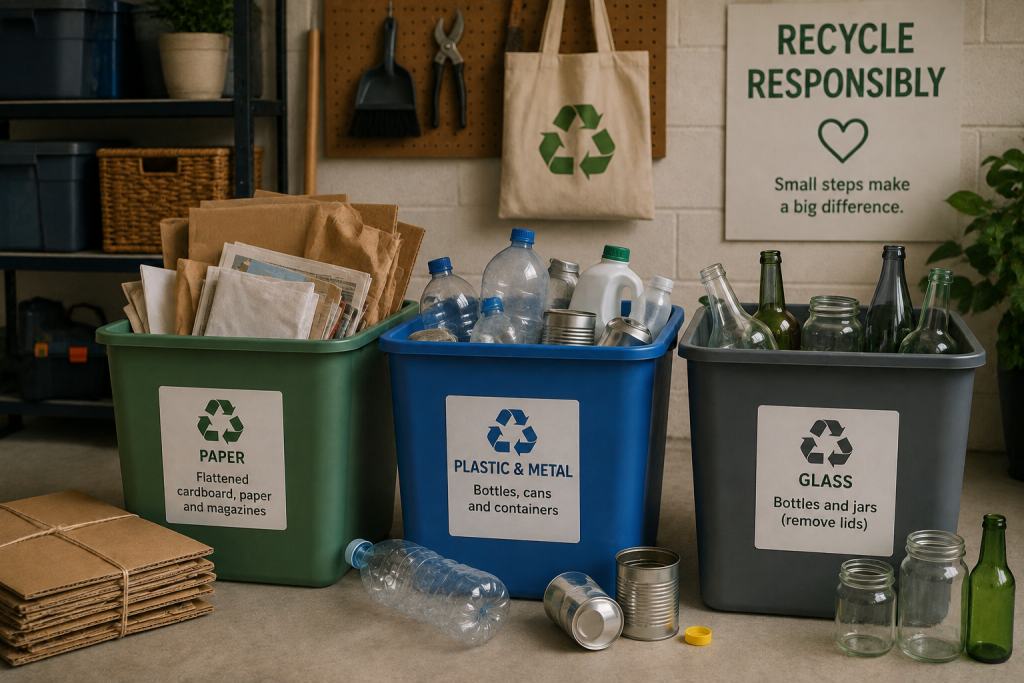
Some belongings simply aren’t suitable for resale or donation.
Broken electrical equipment, damaged furniture, worn textiles and other household materials may need to be recycled or disposed of responsibly.
Check the recycling and waste services provided by your local council before moving day. Rules and facilities vary between locations, particularly for electrical items, batteries, bulky waste and specialist materials.
Avoid leaving this until your final weekend. Larger items may require booked collections or trips to appropriate recycling facilities.
Responsible disposal might not put money into your moving budget, but it prevents unwanted possessions following you unnecessarily to the next property.
Move Store & More Tip #8 – Research local recycling options early rather than discovering disposal restrictions during moving week.
Create a Decluttering and Selling Timeline
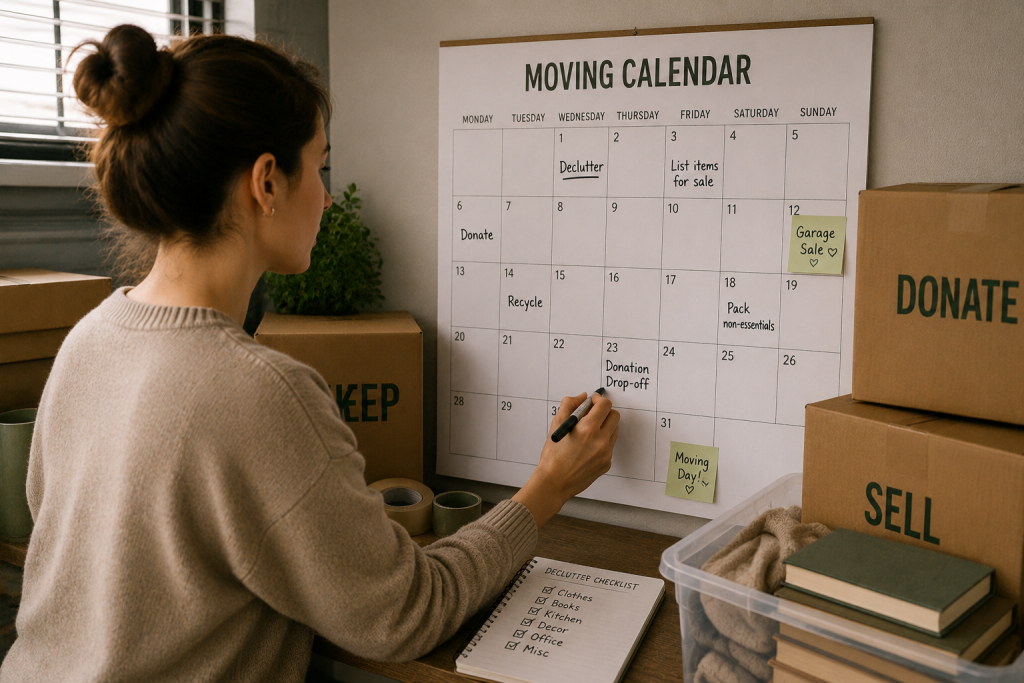
The earlier you start, the more useful selling becomes.
If you begin several weeks before moving day, you have time to photograph possessions properly, compare prices, wait for suitable buyers and arrange collections without accepting the first offer simply because you’re running out of time.
A simple timeline might look like this:
Six to eight weeks before moving: Identify belongings you won’t take and begin listing higher-value items.
Four to six weeks before moving: List remaining saleable possessions and begin donating anything that isn’t worth selling.
Two to four weeks before moving: Reduce realistic asking prices where appropriate and arrange collections.
Final two weeks: Stop creating new listings unless an item is likely to sell quickly. Donate or recycle remaining unwanted belongings.
Final week: Concentrate on packing and moving rather than negotiating over second-hand furniture.
The exact timeline will depend on your move, but the principle is simple: declutter early enough that it makes moving easier rather than becoming another moving-day task.
Move Store & More Tip #9 – Start selling early and set a firm cut-off point before moving week begins.
Decluttering Before Moving Checklist
Before you finish, run through this quick checklist:
- Walk through every room rather than tackling random items.
- Separate belongings into take, sell, store, donate and recycle categories.
- Prioritise bulky and higher-value possessions.
- Research realistic second-hand prices.
- Take clear photographs for listings.
- Measure furniture before advertising it.
- Choose selling platforms based on the type of item.
- Set deadlines for unsold belongings.
- Arrange donations before moving week.
- Check local recycling and disposal requirements.
- Review anything you’ve put into the storage category.
- Stop selling in enough time to concentrate on the move itself.
The aim isn’t to empty your home. It’s to arrive at the new property with possessions you’ve deliberately chosen to keep.
For broader ways to control your relocation budget beyond decluttering, our guide to saving money before moving house covers planning, comparing services, booking early and avoiding unnecessary moving expenses.
Move Store & More Tip #10 – Finish decluttering before your final packing push so the two jobs don’t compete for your time.
Move Store & More – Make Every Item Earn Its Place
Decluttering before moving house isn’t simply about owning less. It’s an opportunity to decide what deserves to come with you, generate money from possessions you no longer need, and avoid spending time and effort moving belongings that will remain unused at the other end.
The most useful approach is also the simplest: sell what’s worth selling, store what has a genuine future purpose, donate what someone else can use, and recycle what’s reached the end of its useful life.
Start early enough, and the benefits can work in both directions. You’ll potentially have some extra money available for moving expenses while reducing the amount of work waiting for you on moving day.
At Move Store & More, we’re interested in helping people make better decisions throughout the moving process rather than simply getting everything from one address to another. A good move isn’t necessarily about taking everything with you. Sometimes, it’s about knowing what to leave behind.
We’ll be back with a new blog shortly. Until then, go well, and we hope you’ll Move, Store & More with us soon.
Don’t forget to check out our top suggestions for moving companies by visiting our dedicated “best of” page.